A Millennium of History: Ceramic Wares from Sehwan
Excavations of the French Archaeological Mission in Sind (MAFS) were headed by M. Kervran in Sehwan’s fortress, Purana Qila, more than twenty years ago (1996-2002). The subject of my PhD (2010, Sorbonne University, Paris, dir. Pr A. Northedge) was more broadly the ceramic culture in Sind from the early Islamic to the late Mughal Period (8th-18th cent. AD), but Sehwan’s ceramic material was at the center of this research. The exceptional longevity of the site, from Antiquity to Modern times, allowed to study the material culture of Sind in the long-term and in relation to other cities of the area and beyond.
Dealing with Medieval and Modern eras, the material discovered in Sehwan fort has for the first time drawn a precise picture of the ceramic objects used, produced, and exchanged in Sind over a thousand years. Inscribed sherds, production tools and coins associated in stratigraphy with the ceramic material, and linked to the layers and structures uncovered, were also used to write the material history of Sehwan from the Umayyad to the Mughal governors.
The « Arab Period » in Sehwan Fort
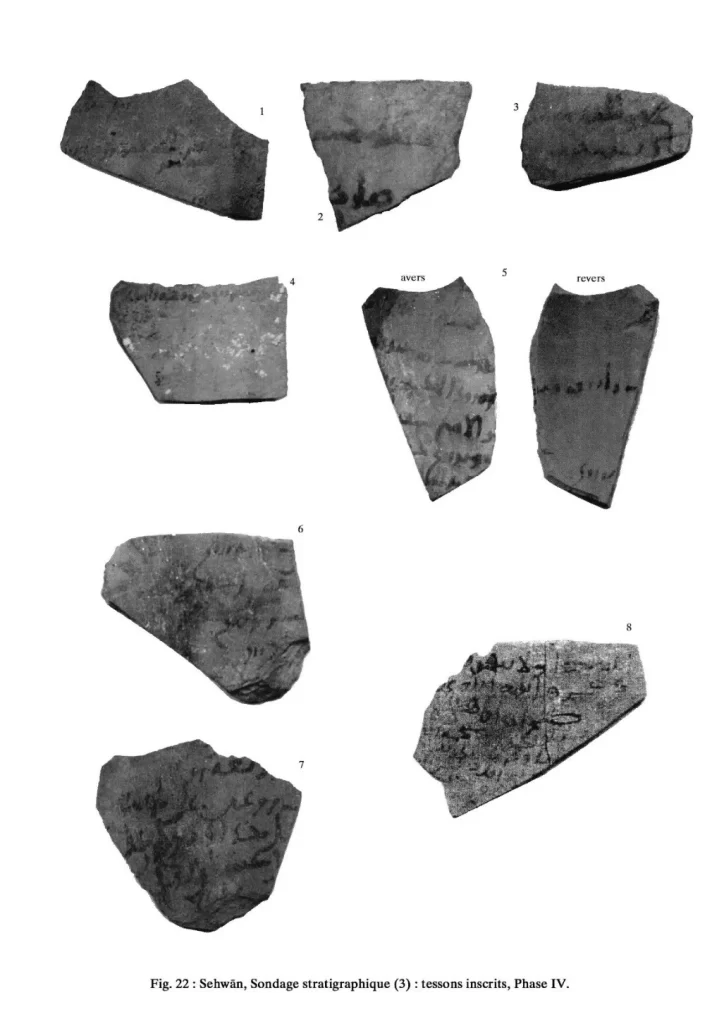
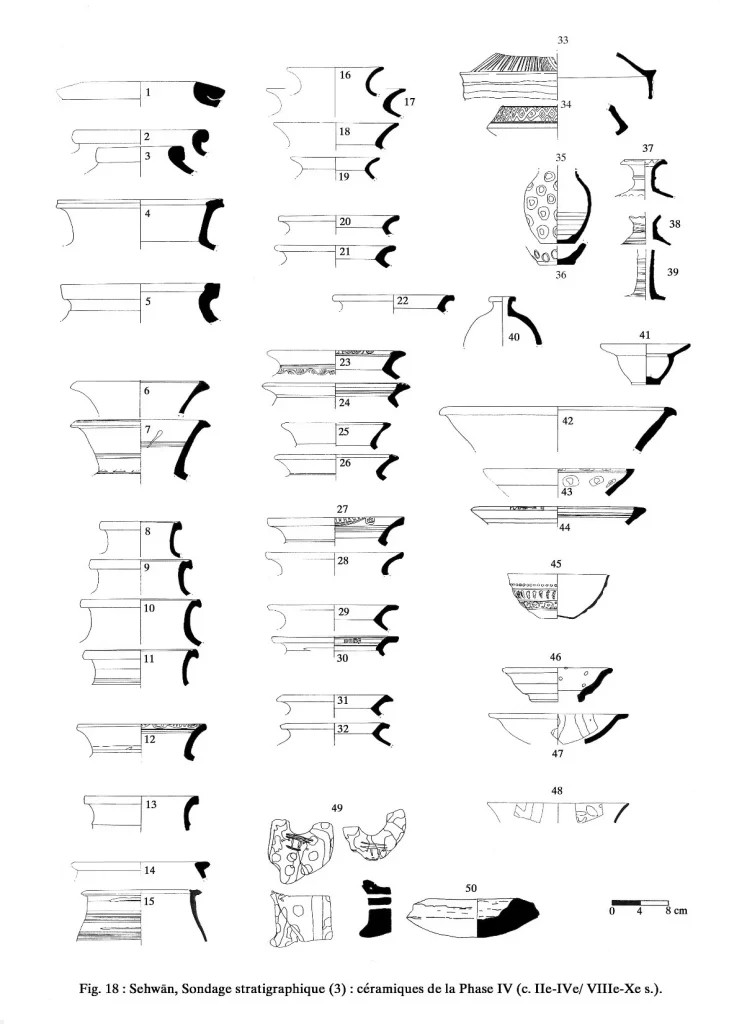
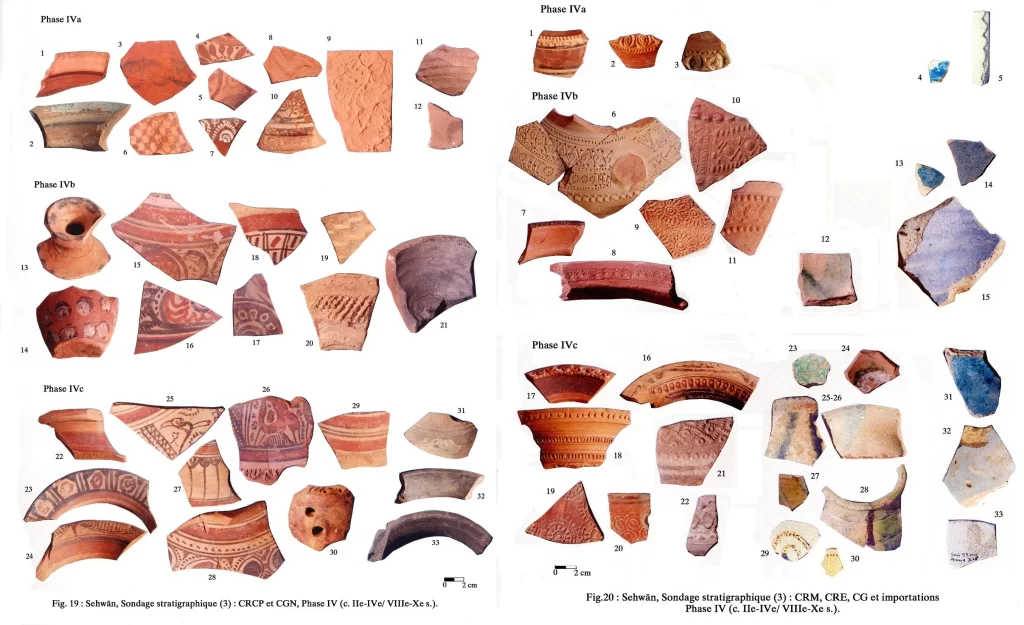
The fort may have been a fortified city at that period (early 8th- late 10th century AD). Coins with the names of Umayyad and Abbasid governors were discovered ; and also coins of the Habbarid emirate. Inscribed sherds in arabic were put to light in the same levels (fig. 1) The excavation revealed some mud-brick and baked-brick structures and brick kilns. Numerous iron slags (about 300) and crucibles were also found : the site was partly occupied by metal workshops. The ceramic material is mainly of red painted wares (fig. 2). The first Glazed wares in statigraphy sign the early Islamic period. They are only imports from Iraq between the 8th and 9th cent. AD . A regional production of glazed ceramics can be identified towards the end of the 9th century, but its real development takes place during the 10th century. It seems to be linked to the habbārid period of the city (fig. 3).
The fortified city up to the early 13th century AD
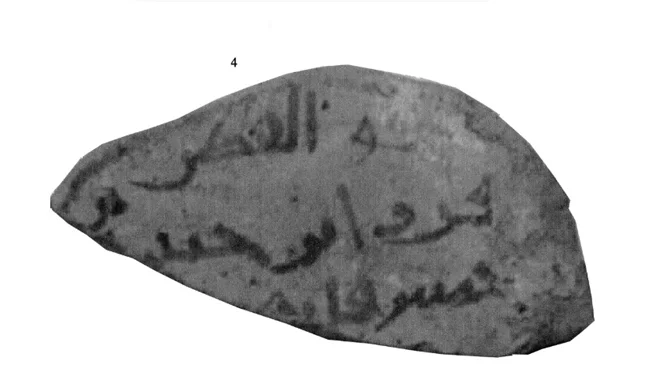
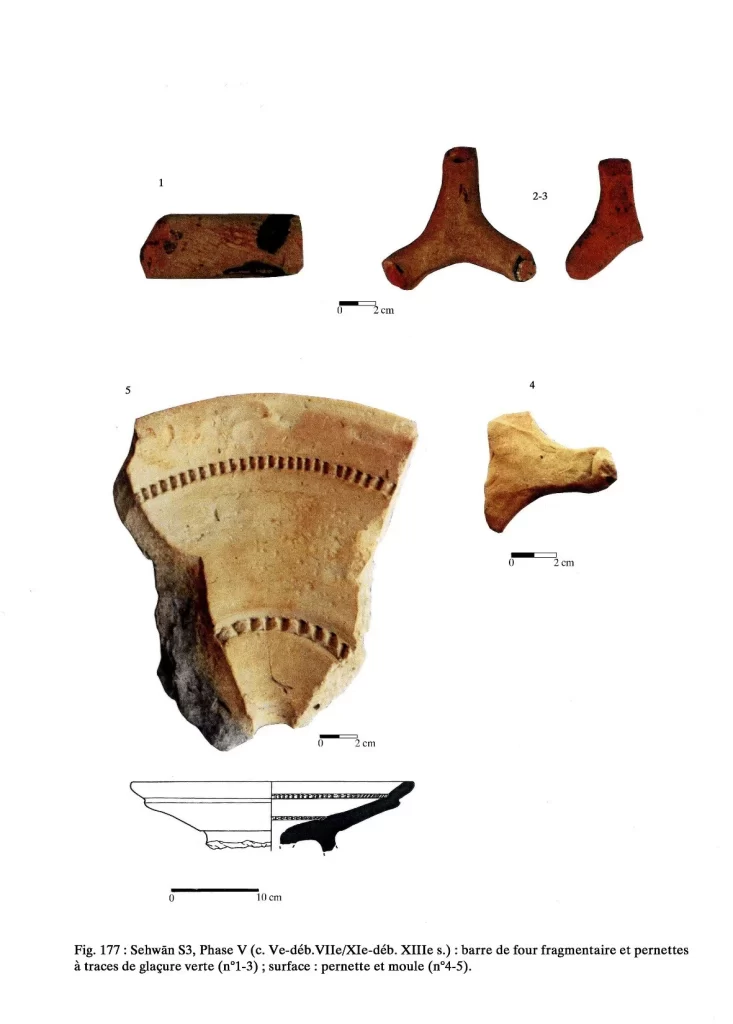
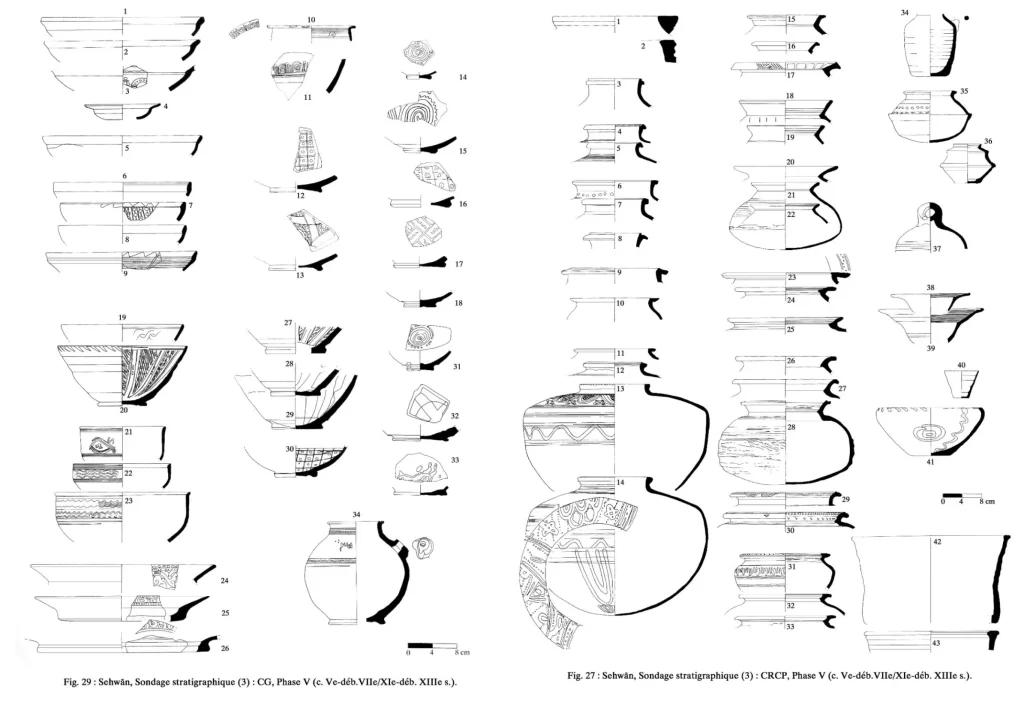
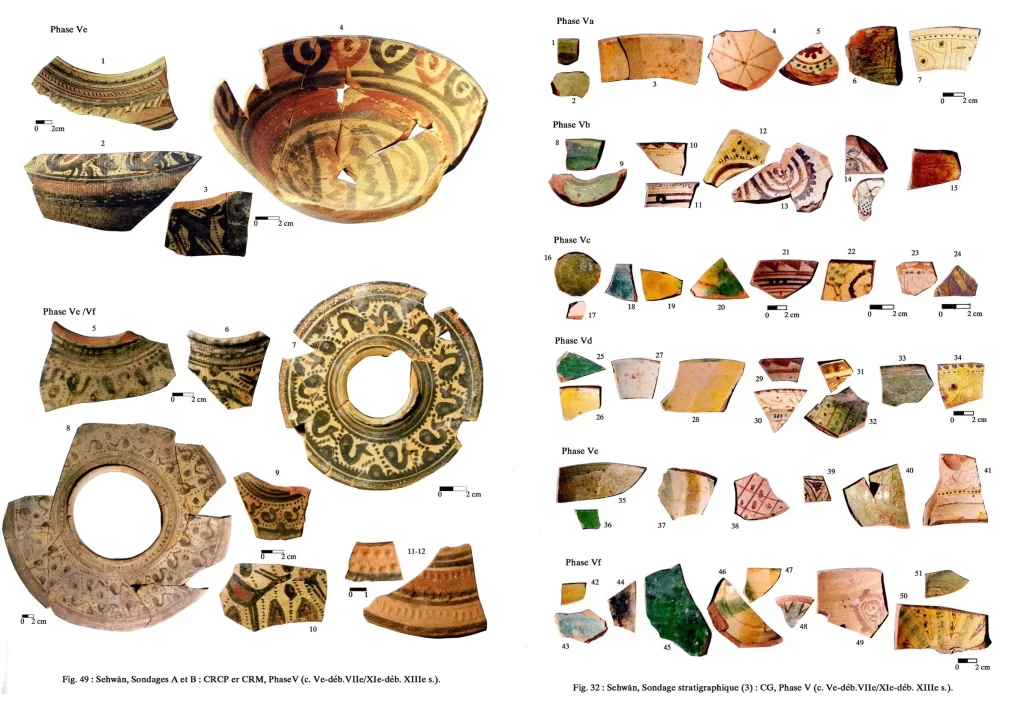
A bazaar was discovered, with alleys and pavements opening onto small baked brick shops. The first phases of the bazaar are probably related to the last period of the Habbārid emirate (late 10th cent. AD to 416 H/1025 AD). The later phases possibly correspond to the period of the Ghaznavid and then Ghūrid sultanates (c.1050-1220). A commercial note in arabic (fig. 4) and some ceramic kiln utensils were discovered in those stratigrafic layers (fig. 5). The ceramic material found shows that this is the richest period of the site (fig. 6). Red ware remains the most common type (about 66% of the material) and is mostly decorated with painted decoration (about 38%). The material is also characterised by the very clear increase of two more luxurious ceramic types: grey or black fabric ceramics (14.3% of the material) and glazed wares (fig. 7), probably of local manufacture (19.2%). The glazed ceramics are mainly bowls and dishes, whose surface ornament is very similar to contemporary Khurāsān productions. They are also similar to those found at Banbhore and al-Manṣūra.
The fort under the Delhi sultanates and Sammas : a garrison place
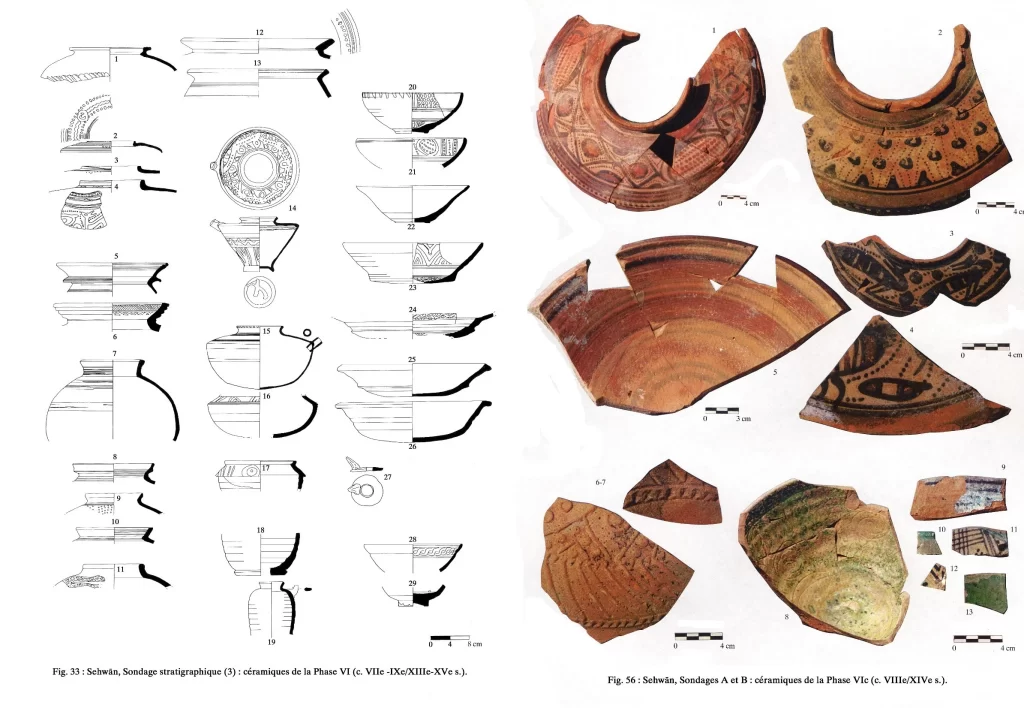
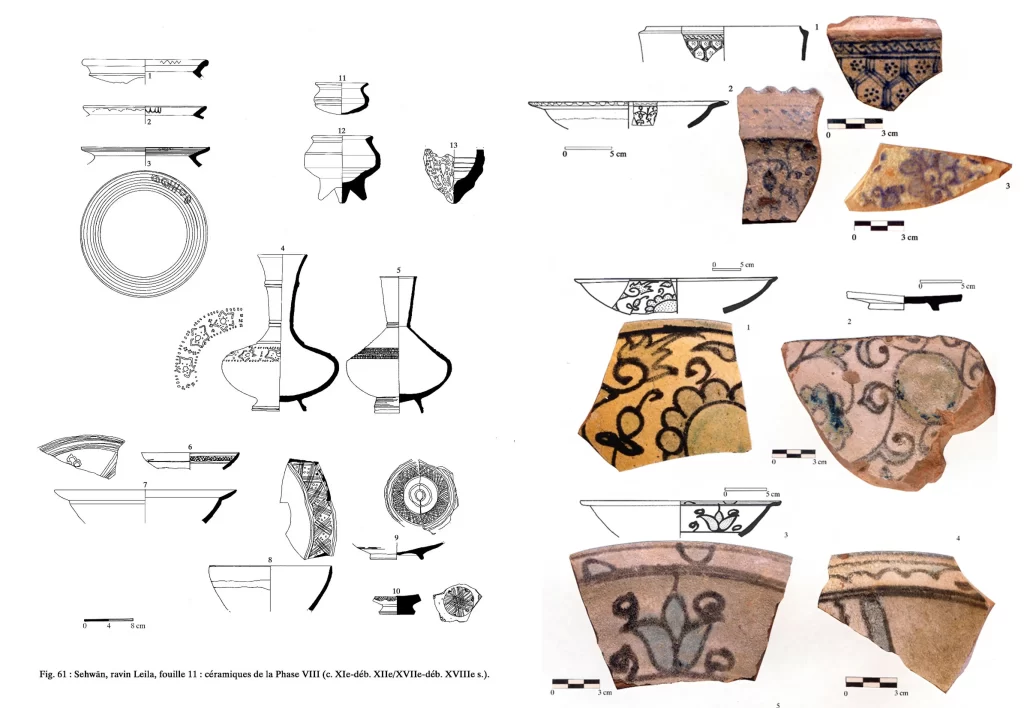
The baked brick structures uncovered in these layers were probably dwellings reserved for the army. Some traces of iron metallurgy were also found. The important testimony of Ibn Baṭṭūṭa who visited Sehwān around 734/1333-1334 confirms the presence of a large garrison quartered in the fort, which was partly reconstructed. The first period of this Phase can be dated to the 13th-14th cent. AD and is related to the period of the Delhi Sultanates The second period is possibly related to the regional Sammās dynasty in the 15th cent. AD. The change in status of the site from fortified city to military stronghold is linked to important changes in the ceramic material (fig. 8). The most sophisticated types, grey and black ceramics and glazed ceramics, are much less frequent and their quantity progressively decreases until they almost disappear at the end of this period.
The military fortress of the 16th century AD
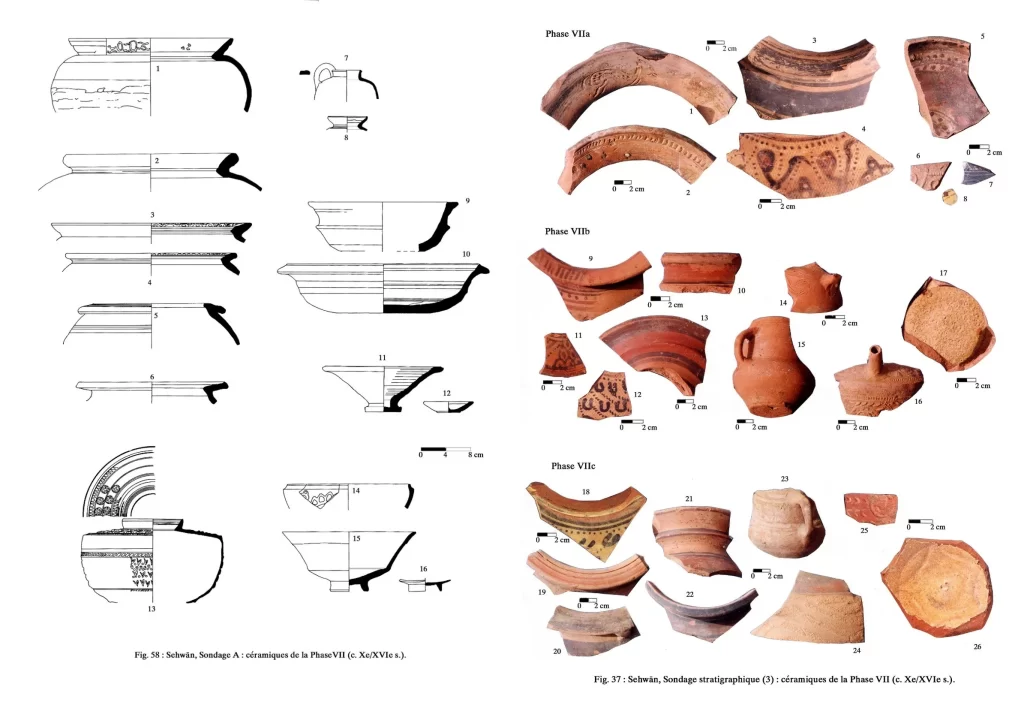
A black layer of destruction seals the previous Phase, possibly related to the taking of the fort by Shāh Beg Arghūn in 928/1521-1522. Mīr Ma˓ṣūm in the16th century attests to the Arghūn and then Tarkhān dynasty that hold on the fort of Sīwistān until the Mughal conquest, but the excavations have not yielded any coins from these periods. Mīr Ma˓ṣūm also indicates that the site was a military fortress at this time. Metallurgical activity is shown by the presence of iron slag and crucibles, but more broadly the excavations have shown despite a repair of the fort, a loose occupation of the site,. The quality of the ceramic material red declines and the glazed wares are coarse, heavy and only monochrome. Only the ceramics with moulded decoration are fine and of quality (fig. 9).
The Mughal Fort: garrison and governor’s place
A palatial residence was partially excavated, overlooking the north-western area of the site where a bath was uncovered, with ceramic material mainly from the surface and from the excavations of the structures.They were associated with ceramic tiles that had fallen from the walls they covered, and with shards of Chinese porcelains and celadons. Other excavated areas, as in the center of the fort, have uncovered much more common ceramic material (fig. 10).