




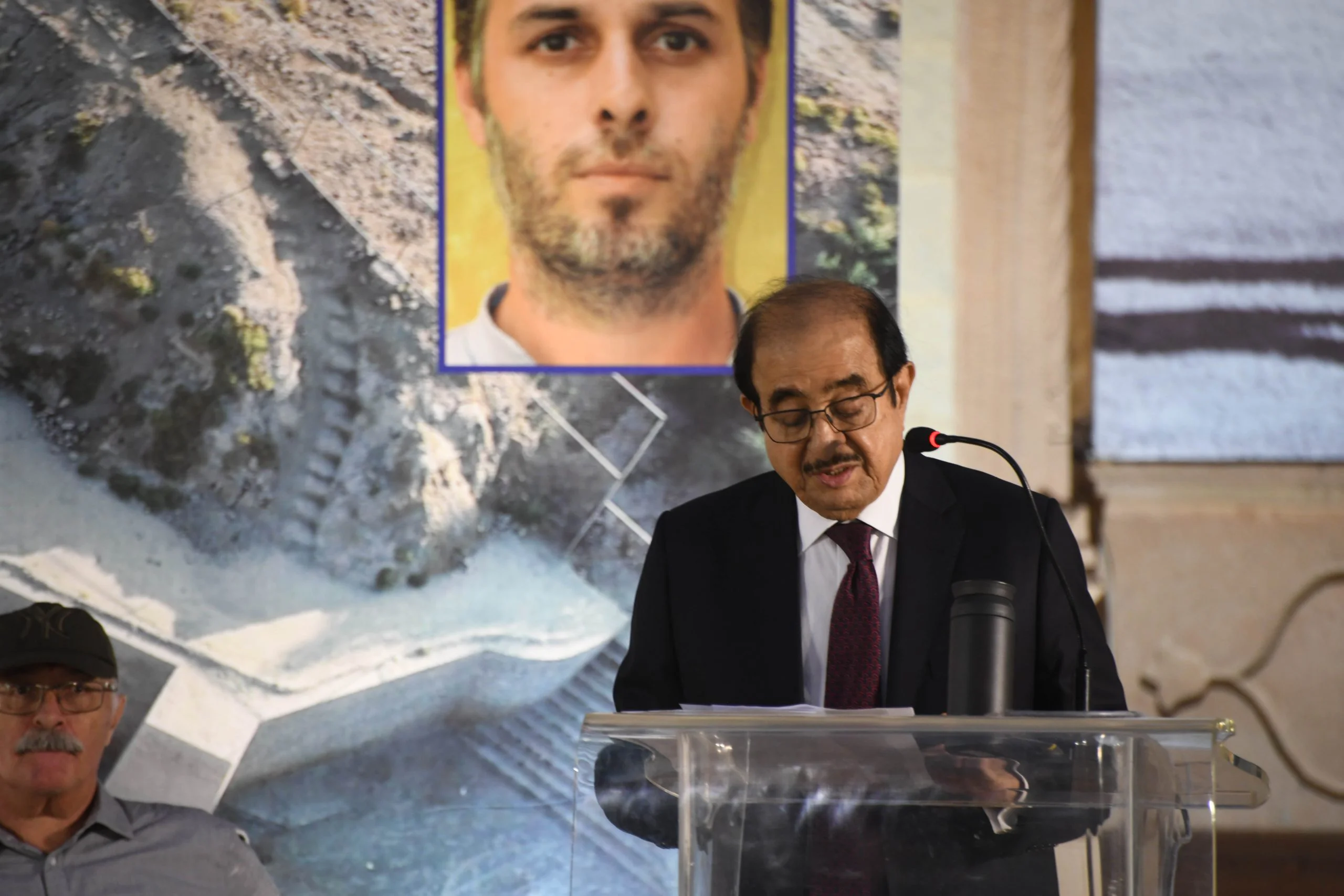
This page features the messages of Endowment Fund Trust’s Chairman Mr. Jehangir Siddiqui printed in the EFT’s annual report
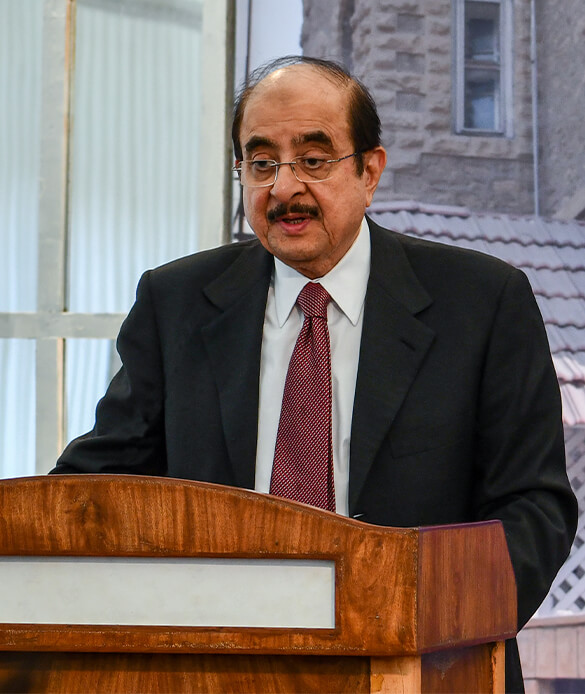
Jahangir Siddiqui
Realising the importance of private sector participation in the preservation of the heritage of Sindh, the Government of Sindh constituted a Management Board for an Endowment Fund for Preservation of the Physical Heritage of Sindh with public private participation headed by Jahangir Siddiqui alongwith 14 eminent members including three ex-officio functionaries of the Government of Sindh. The Board was authorized to adopt its own Terms of Reference and system of operation. An amount of Rs. 1000 million was released in installments in the form of an Endowment Fund.
In the first meeting of the Management Board held on November 11, 2008, a sub committee was constituted to prepare its draft Terms of Reference. In its meeting held on April 3, 2009, it was unanimously adopted that the Board
would be registered as an Endowment Trust on the pattern of the Mohatta Palace Museum Trust. On July 12, 2009 the Managing Board approved the Trust deed and authorized the Chairman Jahangir Siddiqui, Secretary Antiquities Kaleem Ullah Lashari and Trustee Abdul Hamid Akhund to have the Trust deed registered and to fulfill all legal and procedural formalities. Accordingly the Trust was registered on 17-9-2009. The Trust functions as an autonomous nonprofit organization as per its objectives.
During this process two honourable Trustees, Shaukat Tarin and Asad Umar resigned due to their preoccupations. The Board reluctantly accepted their resignations and the vacancies have been filled as per procedure.
The setting up of an Endowment Fund is a laudable step initiated by the Government of Sindh. With the 18th Amendment, its importance has increased many fold. We have observed that with the passage of time there is an awareness amongst people seeking assistance from the Trust for the preservation of Sindh’s Cultural Heritage. The Board acknowledges the efforts of erstwhile Additional Chief Secretary Nazar Hussain Mahar and the magnanimous gesture of Syed Qaim Ali Shah, Chief Minister of Sindh in setting up the Fund.
We are indebted to Advocates M/s Bawaney and Partners for their honorary services for drafting the Trust Deed and having it registered. The Board wishes to place on record the services of Ernst and Young Auditors who have very generously audited our accounts pro bono publico and continue to do so.
The first request calling for expression of interest was invited through the media on August 30, 2009. Endowment Fund Trust for the Preservation of the Heritage of Sindh to date has initiated over (29) projects relating to conservation, restoration of monuments, publications, seminars, workshops, music and laboratory equipment. Nearly 43 proposals are in the pipeline.
All relevant information in connection with the functioning and activities of the Trust have been incorporated in this report and we invite public comment in order to improve our efforts in reaching out to the public and for the preservation of the heritage of Sindh
Sincerely,
Jahangir Siddiqui
Chairman, Endowment Fund Trust
for Preservation of the Heritage of Sindh
Understandably, the first eighteen months of EFT after its inception in 2008 were consumed with the teething problems of formulating a working mechanism for the organisation, which were ironed out by the Trust in four initial meetings. From the time the first EOI was considered in February 2010 until 2014, the board has considered 113 proposals, of which 104 have been approved. However, despite availability of funds, work on 13 conservation projects has been initiated of which only two projects stand completed. Progress on projects is very slow proceed for a number of reasons.
The conservation of historic buildings is a difficult and time-consuming job. It demands the use of the original traditional materials (i.e. stone for stone, brick for brick, mud for mud, lime for lime, chiroli for chiroli, teakwood for teakwood, and so on), along with their particular specifications and the skilled labor equipped with the traditional knowledge needed for authentic conservation. This skilled labor, while abundant in British India, soon fell prey to advancement in construction techniques that were not compatible with or sympathetic to traditional materials, which has led to a dearth of such materials and knowledge today. EFT has taken on the responsibility of reviving some of these dying traditional methods by employing them in the conservation process, and by training craftsmen in the use and benefits of authentic and sustainable restoration. One big hurdle faced by the EFT is the commissioning of technical personnel and works which we intend to overcome by training a team for the purpose.
Situations often arise in which certain proposals are withdrawn after the project has been signed with the EFT; a list of such projects has also been provided in this report. Some of these projects on which work has been suspended include the Mir palaces and havelis in Khairpur, and the Sirai Mujahid Hussain Jumani House in Kot Diji, but they are currently in the process of being reactivated as work has started at the White Palace at Kot Diji.
Earlier EFT had published a report covering the period 2008 to 2012, this report covers upto mid 2015. It is a public document and we invite views and advice to make it an effective body in order to put a check to our vanishing heritage.
My colleagues and I are aware of the colossal task that lies ahead of us, the entire province is littered with heritage assets that warrant attention nay immediate attention. Restoration and conservation is a slow process, knowledgeable and forthcoming experts are also difficult to find, rarely do we come across voluntary workers. Regrettably patience is elusive and self styled experts spare no stone unturned to complain at different levels, but we move on doing our bit. It is always invigorating and refreshing to find friends who are sympathetic to our cause. We wish everybody well.
Sincerely,
Jahangir Siddiqui
Chairman, Endowment Fund Trust
for Preservation of the Heritage of Sindh
It is with immense pride and a deep sense of responsibility that we present the 6 years report of the Endowment Fund Trust for Preservation of the Heritage of Sindh EFT (2019-2025). As we reflect on our journey since 2009, we are humbled by the collective efforts that have positioned EFT as a beacon of cultural preservation in Pakistan. This report not only highlights our achievements but also underscores the urgent need to safeguard Sindh’s heritage against growing environmental and societal challenges.
A Legacy of Restoration and Resilience
Over the past years, EFT continued its unwavering commitment to preserve Sindh’s tangible and intangible heritage. With 80 projects undertaken across the province—74 successfully completed and 9 in progress—we have restored iconic landmarks such as the Naukot Fort, Mir Karam Ali Talpur Tomb Complex, Ranikot Fort (in last phase), Sehwan Fort (on-going) and Karachi Press Club, ensuring their survival for future generations. However, the devastating 2022 monsoon floods reminded us that heritage preservation is a continuous battle. The damage to Ranikot Fort, lovingly restored by EFT in prior years, demanded immediate action. Our swift response—repairing the Mohan Gate, Sann Gate, and critical walls—exemplifies our resilience and long-term stewardship. Climate change is no longer a distant threat; it is here, and EFT is pioneering strategies to integrate disaster risk reduction into heritage conservation. Shortage of funds is one factor that may lead to EFT’s stoppage of work.
Bridging Past and Future
EFT’s mission extends beyond brick and mortar. Our international conference on Alexander in the Indus Valley, featuring luminaries like Dr. Robin Lane Fox, brought global attention to Sindh’s historical significance. Similarly, the “Disaster Management: Cultural Monuments and Heritage” conference emphasized the need for proactive measures to protect vulnerable sites. We have also embraced digital innovation to make heritage accessible to all. With over 32 publications, a dynamic YouTube channel, and the Shah jo Ganj digital archive, we are striving to ensure that Sindh’s stories reach scholars, youth, and the global diaspora. Community: The Heart of Preservation
Heritage thrives when communities own it. Through regional centers in Hyderabad, workshops, and cultural festivals, EFT has created awareness amongst the locals to become custodians of their legacy. The vibrant revival of Sindhi folk music, cuisine, and crafts at events like those featuring Abida Parveen reaffirms that culture is a living, evolving force.
The Road Ahead
As Chairman, I envision EFT as a catalyst for:
- Climate-Adaptive Conservation: Strengthening monuments against floods and erosion.
- Policy Advocacy: Collaborating with Government to enforce heritage protections.
- Youth Engagement: Expanding digital and educational outreach to inspire future guardians.
- Global Partnerships: Attracting international expertise and funding.
To our dedicated team and the people of Sindh – thank you. Through the visionary one-time grant provided by the Government of Sindh under this pioneering Public-Private Partnership, we are transforming not just ancient stones, but safeguarding the living soul of our civilization. Together, we are building more than restored monuments – we are fortifying Sindh’s cultural identity for generations to come. We look forward to support from the Sindh Government to carryout our activities.
Sincerely,
Jahangir Siddiqui
Chairman, Endowment Fund Trust
for Preservation of the Heritage of Sindh