

Historical Background
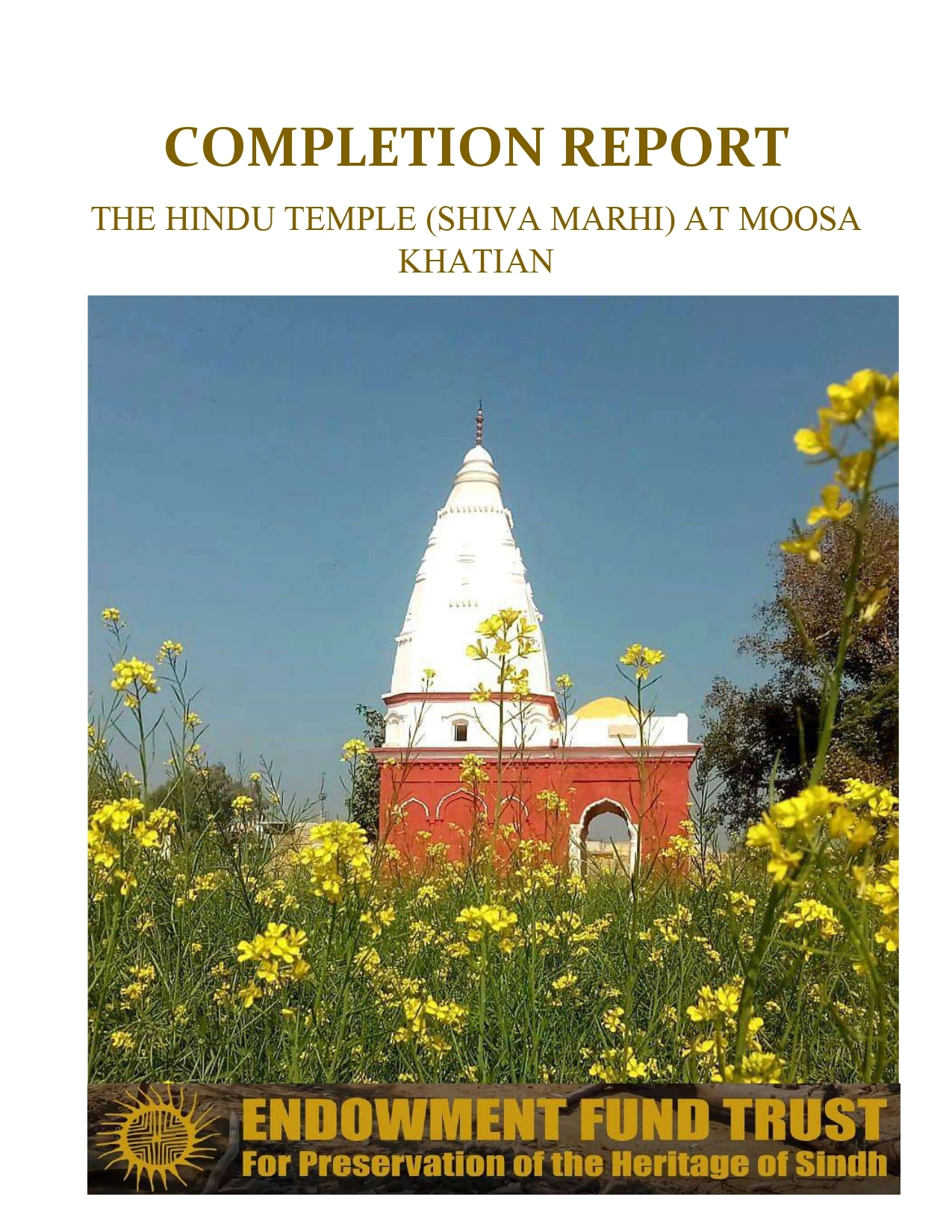
Muhammad Ismaeel Khan was a celebrated general of the Talpur Dynasty. The town of Moosa Khatian was named after his son, Muhammad Moosa Khan Khatian. A narrow road leads to the historic town of Moosa Khatian. The town is covered by ancient trees and a dense canopy can be observed in the townscape as one turns towards the town. From within the trees, emerges the Inverted Lotus Dome of the Tomb of the Khatian Jagirdars; one of the tallest structures of the town and neighboring vicinities. Right at the entrance of the historic town, opposite the Public School of Moosa Khatian, an old temple can be observed in the farmlands. The temple appears to be interwoven with an ancient tree and together form an aesthetic ensemble.
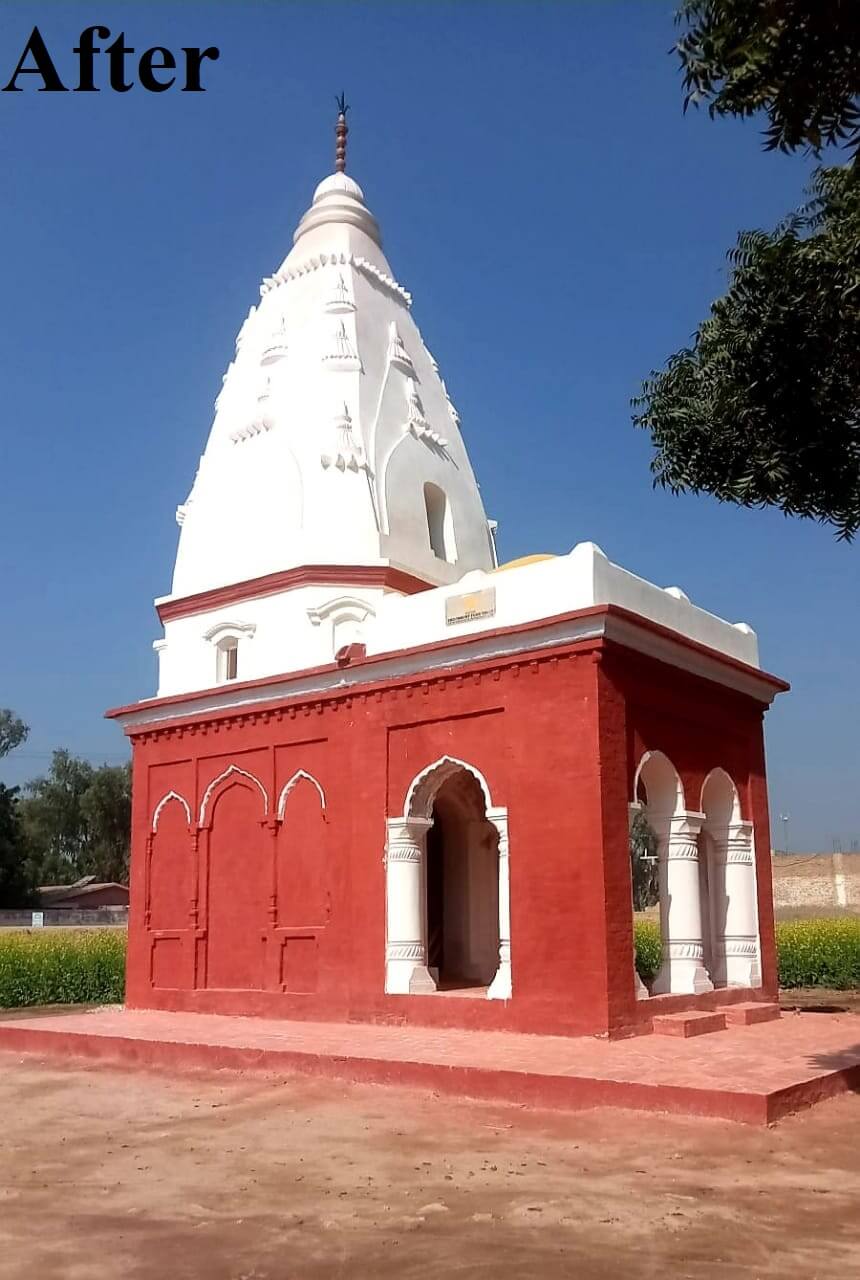
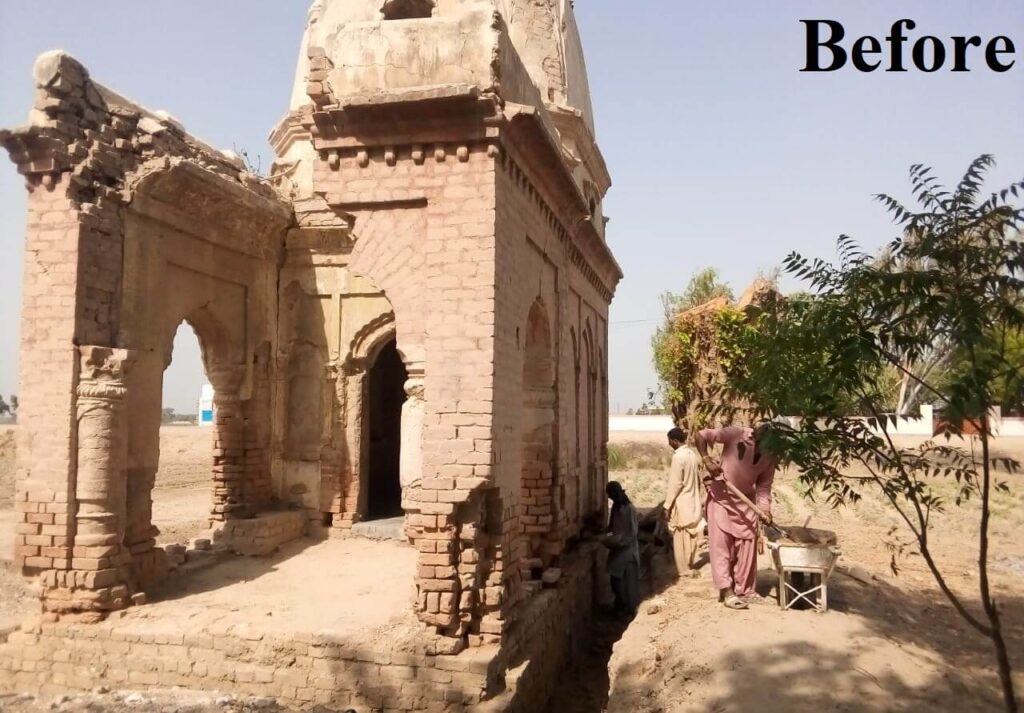
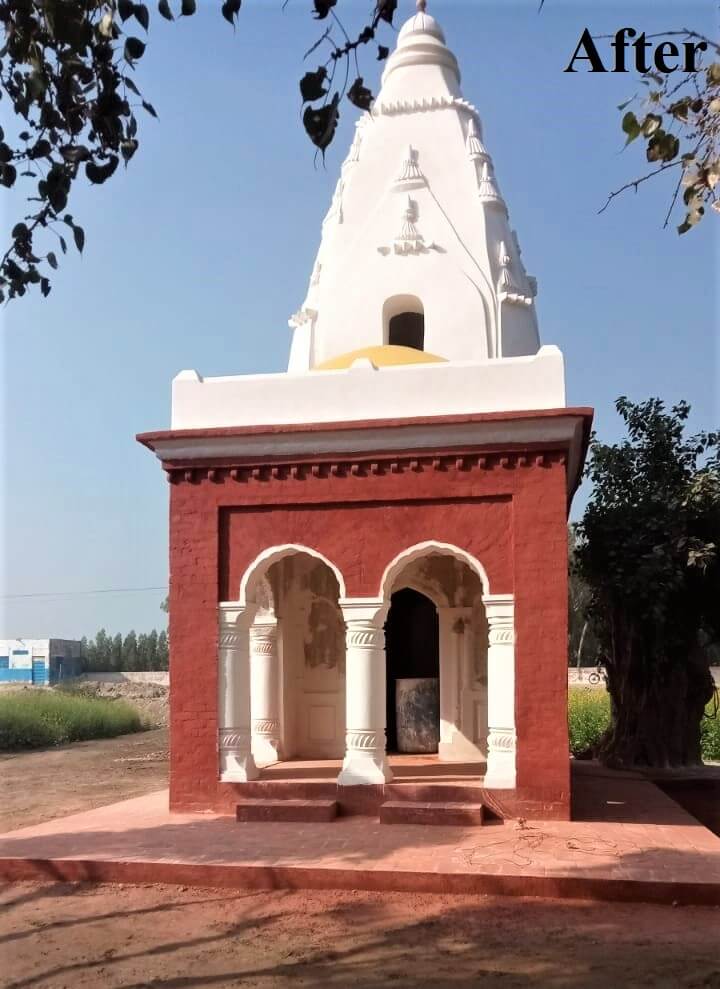
The temple is complete with a Mandap; Garbhagriya; and Shikhara. Local legends claim the temple to be multiple centuries old. Alternatively, apparent observations trace the temple back to the colonial era at the very least. ‘NWR’ is written on the frogs of many bricks which could also be an acronym for ‘North Western Railway’; a colonial era railway project. However, it is well known that the temple has been part of the historical townscape for a long time. Now neglected and at mercy of time and the elements, the temple is in a ruined condition. A living monument; the temple is among the few historic temples in the vicinity of Moosa Khatian and is in dire need of conservation.
The Reginal Office of EFT has recorded the timelines of conversational documentation along with details of projects , conditional reports and before and after phases for all completed projects. Click the report below to view and browse through the report of EFT’s Regional Office